Functional Reactive Programming
Functional Reactive Programming is an abstraction to define and reason about temporal systems. In FRP, systems transform time-varying inputs into time-varying outputs. The basic construct of FRP is that of a signal, notionally defined as a function from time to a value. The nature of time, how signals can be dfined and combined, and how they are evaluated during runtime, gives rise to a multitude of FRP variants and implementations.Implementations
Yampa
Yampa is a domain-specific language embedded in Haskell for programming hybrid (mixed discrete-time and continuous-time) systems. Yampa systems are defined in terms of causal signal functions. Yampa was created by Henrik Nilsson and Antony Courtney around 2002-2003. Yampa is backend agnostic, you can connect it to any backend you want. Existing backends include SDL, SDL2, OpenGL, WX, HTML, HTML5 canvas, Gloss, diagrams, and Keera Hails. It comes with a testing library that allows you to use QuickCheck to test your games, and a time-travel debugger.
Yampa is actively maintained and updated, and is available on hackage: http://hackage.haskell.org/package/Yampa.
 |
 |
 |
|---|---|---|
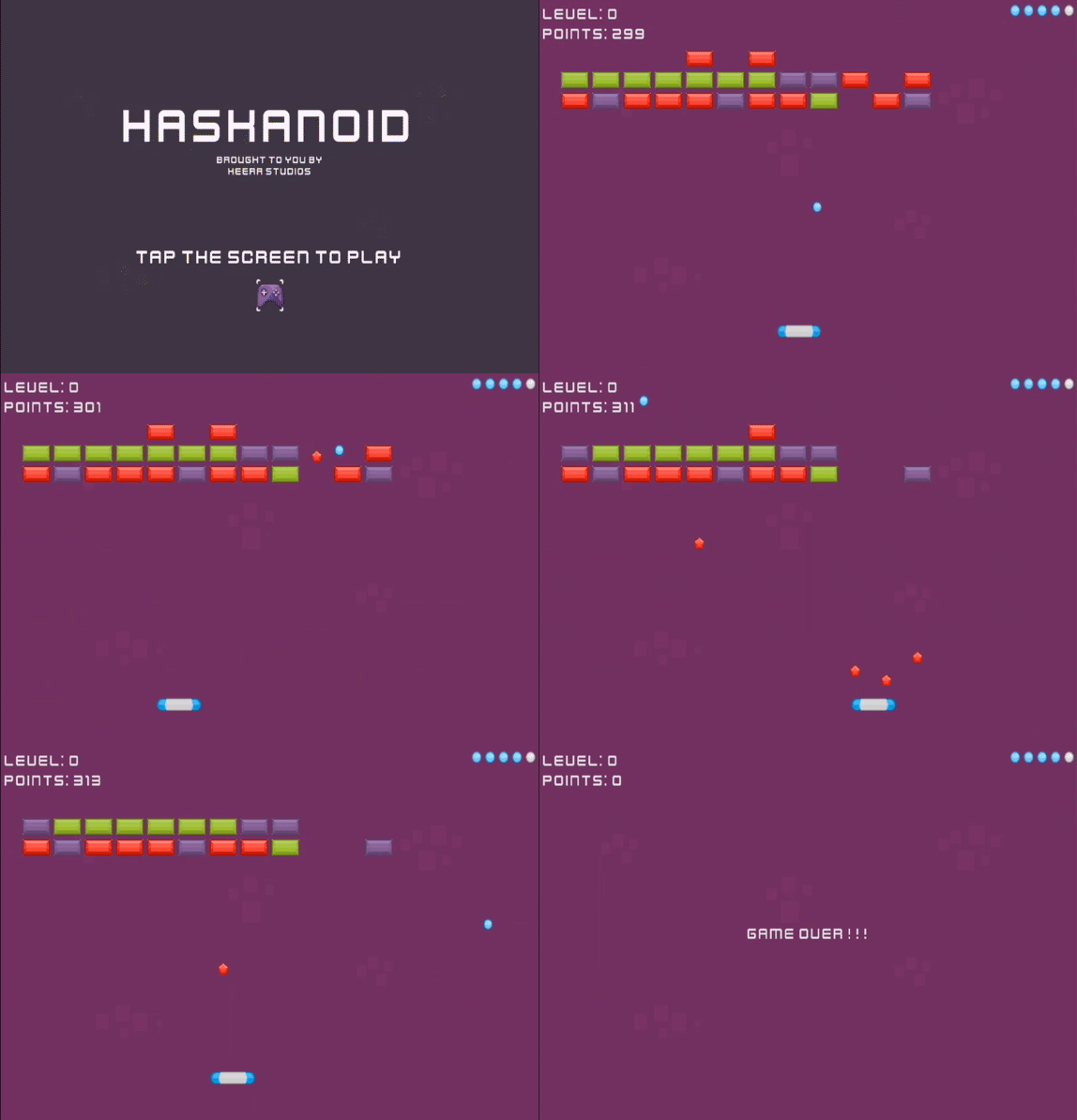
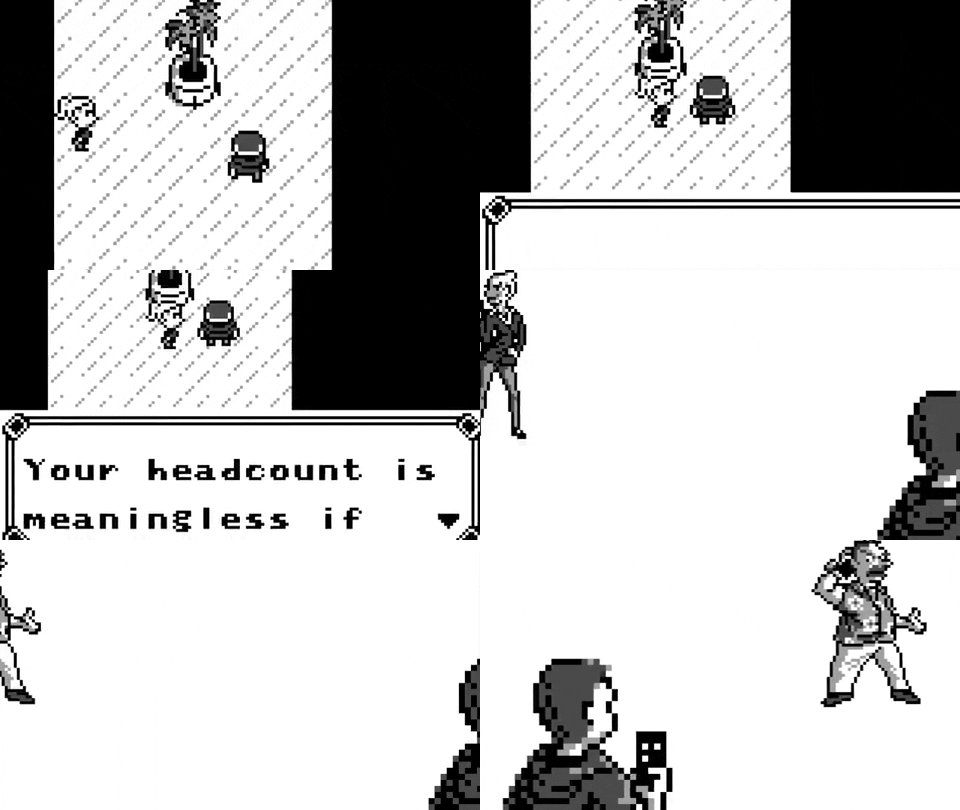
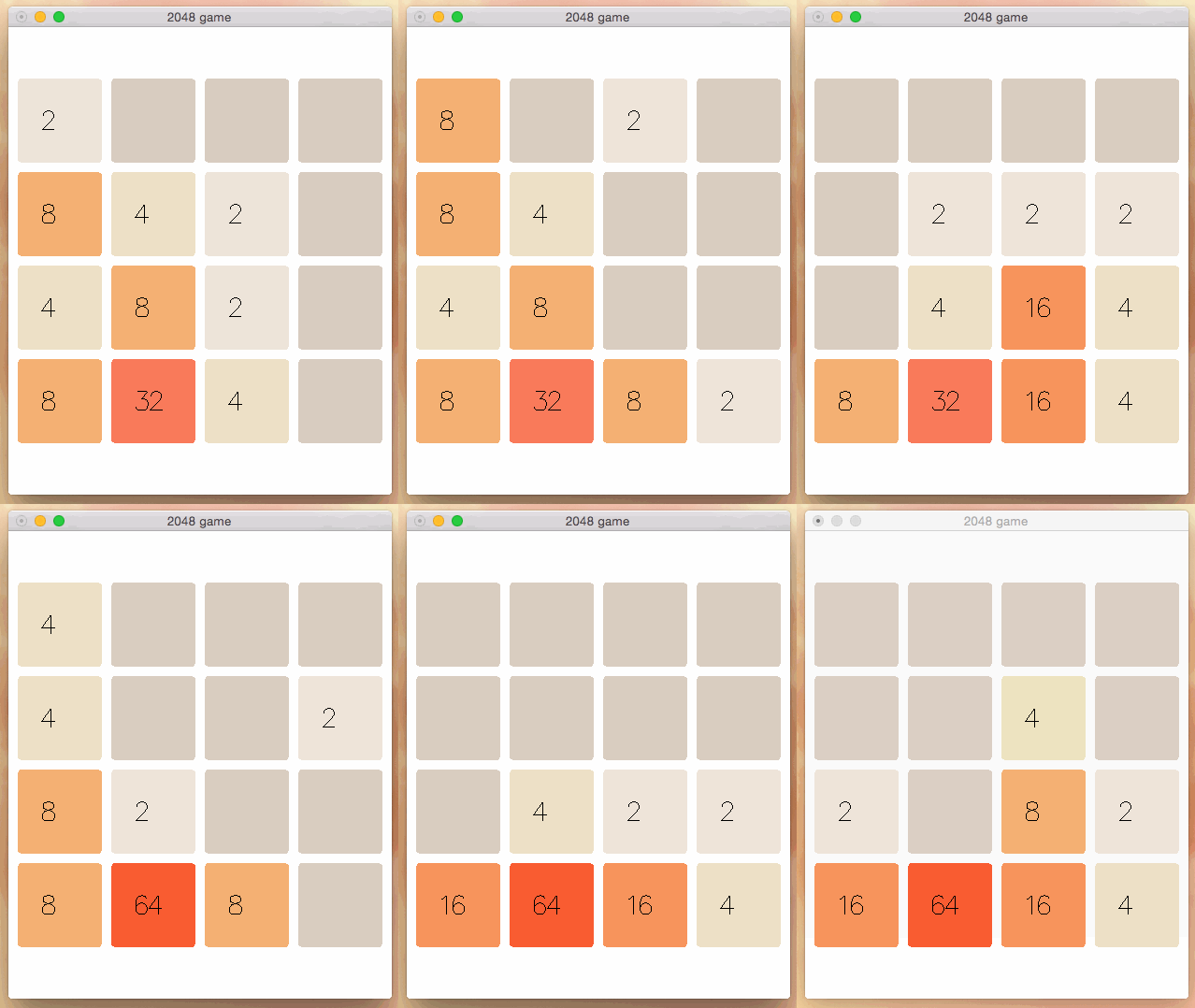
| Haskanoid, SDL cross-platform arkanoid. | Peoplemon, a role playing game | Yampa2048, a gloss board game |
There are many programs written in Yampa, for example:
- Haskanoid: a game that uses SDL multimedia, wiimote and kinect. It’s cross platform and works in desktop, mobile, and web.
- Space invaders.
- Frag: a 3D first person shooting game.
- Peoplemon: a role playing game.
- Yampa-2048: an implementation of the game 2048 using Yampa and Gloss.
- MandelbrotYampa: a “hello world” using SDL2, Yampa and OpenGL.
- Haskelloids: a reproduction of the Atari 1979 classic “Asteroids”
- Magic Cookies, a Haskell mobile game available for iOS and Android.
More can be found using the reverse dependency finder.
Dunai
Dunai is a domain-specific language embedded in Haskell for programming reactive systems. Dunai systems are defined in terms of causal monadic stream functions. Dunai was created by Ivan Perez and Manuel Baerenz during 2014-2016.
Installation
Dunai is available on hackage: http://hackage.haskell.org/package/dunai.
$ cabal sandbox init         # Optional, but recommended
$ cabal update
$ cabal install dunai
There is an implementation of Yampa on top of Dunai, called bearriver. The part included in bearriver is API compatible with Yampa. Bearriver is available on hackage: http://hackage.haskell.org/package/bearriver. You can install it with:
$ cabal sandbox init         # Optional, but recommended
$ cabal update
$ cabal install bearriver
Papers and technical reports
- Extensible and Robust Functional Reactive Programming (Ivan Perez; 2017)
- Testing and Debugging Functional Reactive Programming (Ivan Perez and Henrik Nilsson; 2017)
- Functional Reactive Programming, Refactored (Ivan Perez, Manuel Bärenz, and Henrik Nilsson; 2016)
- Safe Functional Reactive Programming through Dependent Types (Neil Sculthorpe and Henrik Nilsson; 2009)
- Push-Pull Functional Reactive Programming (Conal Elliott; 2009)
- Switched-on Yampa: Declarative Programming of Modular Synthesizers (George Giorgidze and Henrik Nilsson; 2008)
- Demo-outline: Switched-on Yampa: Programming Modular Synthesizers in Haskell (George Giorgidze and Henrik Nilsson; 2007)
- Dynamic Optimization for Functional Reactive Programming using Generalized Algebraic Data Types (Henrik Nilsson; 2005)
- The Yampa Arcade (Antony Courtney, Henrik Nilsson, and John Peterson; 2003)
- Arrows, Robots, and Functional Reactive Programming (Paul Hudak, Antony Courtney, Henrik Nilsson, and John Peterson; 2002)
- Functional Reactive Programming, Continued (Henrik Nilsson, Antony Courtney, and John Peterson; 2002)
-
Genuinely Functional User Interfaces (Antony Courtney and Conal Elliott; 2001)
- See also:
- Collection of Yampa diagrams
- Henrik Nilsson’s publications
- Ivan Perez’s publications
- First Year PhD Report (Ivan Perez, 2014), chapter 3 includes a review of FRP and outlines some existing issues.
Talks
- Ivan Perez (with Henrik Nilsson): ICFP 2017: Testing and Debugging FRP
- Ivan Perez (with Manuel Baerenz and Henrik Nilsson): Haskell Symposium 2016: Functional Reactive Programming, Refactored
- Ivan Perez (with Henrik Nilsson): Haskell Symposium 2015: Briding the GUI Gap with Reactive Values and Relations
- Ivan Perez: Haskell Meetup Group (June 2014): Functional Games, Reactivity and UIs